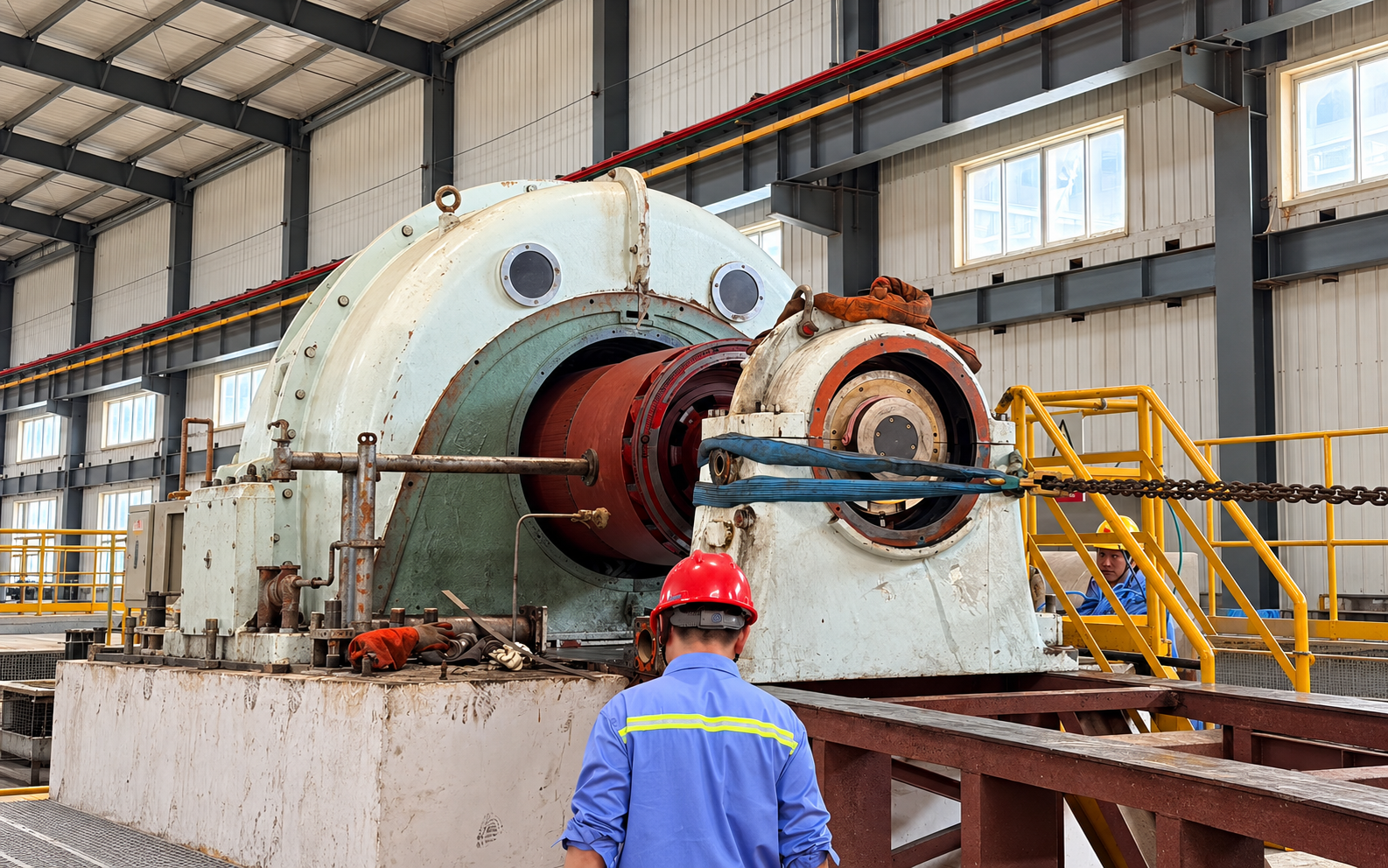
A report of “main steam stop valve leakage” does not identify the leak path or the repair. Steam may pass through the closed valve, escape around the stem sealing system, or come from a body or bonnet joint. A valve may also fail to reach its intended closed position because of a travel, actuator, or control issue. These conditions have different consequences and require different inspection scopes.
The distinction matters because turbine stop valves are part of the unit’s steam admission and shutdown protection. GE Vernova describes reliable operation of the main stop and control valves as critical to safe, predictable steam-turbine operation. The exact valve arrangement, terminology, and acceptance criteria still depend on the turbine design and the applicable OEM documents.
First identify which leak path is being reported
Internal seat leakage means steam is reported downstream of a valve that is intended to be closed. The suspected path is across the closure interface between the valve disc or plug and its seat. Plant operators may identify the concern through existing pressure, temperature, flow, alarm, or approved test records. These indications help define the question for engineering review; they do not by themselves prove that the seat is damaged.
External stem-seal leakage means steam is escaping to the surroundings at or near the moving stem’s sealing area. The packing or stem-seal system is designed to control leakage along that path. Emerson’s general control-valve handbook describes packing as the pressure seal around a globe-valve stem and discusses leakage around the stem as a reason for inspection or replacement. That general mechanism is useful for terminology, but a turbine stop valve must be assessed against its own OEM design and maintenance instructions.
Other external leakage may be reported at a pressure-containing body, bonnet, joint, connection, or drain arrangement. The visible location is useful evidence, but steam flow, insulation, guards, and operating conditions can make the apparent source misleading. Do not treat a photograph or a description such as “near the valve” as a confirmed defect location.
A closed-position indication does not prove seat damage
If a valve is indicated closed but leakage is suspected downstream, the investigation may need to consider both the seating components and the valve’s ability to travel and close as designed. Position feedback, actuator condition, trip or hydraulic-control records, linkages, guides, and operating history may be relevant depending on the arrangement. Conversely, a position indication alone does not establish that the closure interface is tight.
Valve parts vary by make and model. Siemens Energy’s Gimpel valve-parts glossary illustrates components such as a seat, disc assembly, pilot valve and stem, and leakoff bushing; those names and the component layout should not be assumed to match every turbine. Use the equipment drawing, valve tag, and parts documentation to identify the actual construction.
What evidence helps define a useful scope?
For an engineering review or outage enquiry, provide records that already exist and can be shared safely:
Turbine manufacturer, model, serial number, unit capacity, and valve tag or location.
Whether the concern is reported as downstream passage, leakage to atmosphere, or a valve that does not reach the expected position.
When the condition was first noticed and the operating state at that time, such as start-up, steady load, shutdown, or after a trip.
Available trends, alarms, position-feedback records, operator logs, and prior approved leakage-test records.
Previous inspection, repair, seat/disc replacement, stem, packing, actuator, and control-system records.
The applicable valve drawing, parts list, OEM maintenance instructions, and any site-approved acceptance criteria.
The planned outage window, access constraints, and whether parts identification or sourcing is also required.
Do not approach, touch, tighten, or attempt to diagnose a suspected live steam leak. An external steam release can cause severe injury. Follow the plant’s operating and emergency procedures and keep personnel clear. This article does not provide an in-service test or isolation procedure.
Inspection and repair decisions should follow findings
During an appropriately planned and isolated maintenance scope, inspection may cover the closure surfaces, disc or plug, stem, guides or bushings, packing box or stem-seal components, pressure joints, and actuator or travel-related components relevant to the finding. The actual scope must follow the valve design, plant safety controls, and the responsible engineering authority.
Possible corrective work may include cleaning or restoring a sealing surface, machining or replacing a seat or disc, addressing stem or guide condition, renewing sealing components, repairing an approved pressure-boundary defect, or correcting an actuator/control issue. These are possible scope categories—not a recommendation for a particular valve. The decision depends on inspection results, dimensional and material requirements, OEM instructions, available repair procedures, and customer approval.
GE’s steam-turbine service catalogue lists valve-seat replacement and valve-bore/chest repair among examples of repair offerings. That confirms these can be distinct work scopes; it does not establish that either is suitable for a specific unit or that a particular provider has OEM authorization. Define the proposed method only after the component and defect have been confirmed.
Set acceptance criteria before work begins
Do not apply a generic leakage limit to every turbine stop valve. The applicable criterion may depend on the valve design, OEM documentation, plant specification, test conditions, and the valve’s safety function. Agree the inspection records, repair records, functional checks, test method, acceptance authority, and any restrictions before the valve is returned to service. Any testing must use the approved plant and OEM procedure; this article intentionally does not provide a test sequence or numeric limit.
A useful close-out record identifies the original finding, the inspected components, the evidence used for the repair decision, the parts repaired or replaced, the approved test results, and any follow-up action. This lets the plant compare future trends against a traceable maintenance history rather than a brief note that the valve was “repaired.”
Prepare a valve-leakage enquiry
When requesting a technical review, state whether the concern is suspected seat leakage, stem-seal leakage, another external leak, or incomplete closure—and mark any uncertainty. Include the turbine and valve identity, available operating and maintenance records, drawings or part numbers, and planned outage details. If supplying parts is part of the request, include the valve tag, component reference, drawing revision, quantity, and required delivery location; confirm compatibility before ordering.
Our inspection and diagnostics service can review reported operating symptoms and define an inspection question. Confirmed repair requirements can be scoped through repair and restoration or the wider steam turbine overhaul service. For component identification and supply enquiries, see steam turbine spare-parts support. The final scope depends on the equipment documentation and inspection findings.