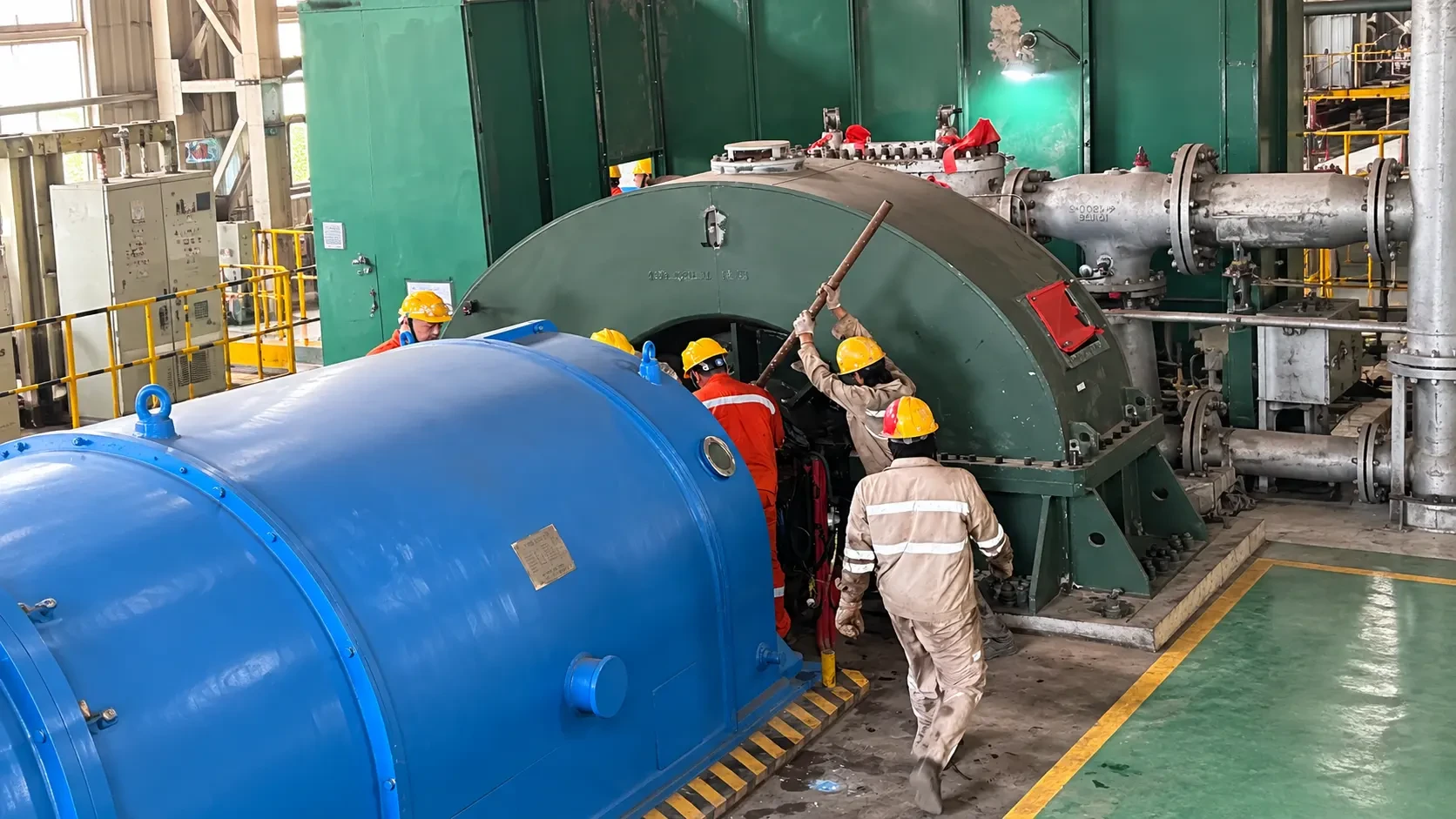
Steam turbine gland seals and shaft sleeves are often discussed together during an outage because both are associated with the shaft area. They are not the same component, however, and a clear distinction helps avoid incomplete enquiries, incorrect part identification and rework in the scope definition.
What a gland seal does
A gland seal is part of the turbine steam-sealing arrangement around a shaft where it passes through the casing. Depending on the turbine design and location, the arrangement limits steam leakage outward or air ingress inward. A sealing system may include labyrinth elements, packing or other design-specific components, casing interfaces, and connections to a seal-steam or leak-off system. The exact arrangement varies by machine and section.
What a shaft sleeve does
A shaft sleeve is a separate component fitted over or associated with a shaft at a defined location. Its function and construction depend on the machine design. A sleeve may provide a replaceable surface or interface, but it should not automatically be described as a gland-seal sleeve. The drawing, part number and position in the assembly should establish what the component actually is.
Why the distinction matters
“Gland seal replacement” and “shaft sleeve replacement” can describe different work. The gland-seal scope may concern stationary sealing elements and their casing interfaces, while a shaft sleeve enquiry concerns a rotating component and its fit or interface with the shaft. Confusing them can leave out related parts, inspection requirements or engineering decisions. Avoid choosing a repair method from a name or photograph alone.
Information to collect before requesting a quotation
Turbine manufacturer, model, serial number, and the turbine section or location.
Equipment tag and the drawing number and revision, if available.
Exact item name from the parts list, part number, and quantity.
Clear photographs of the component and its installed location, with scale and orientation where practical.
Known modifications, prior repairs, operating history relevant to the finding, and the reason the item is being considered for replacement.
For outage planning: access constraints, inspection status, required delivery or outage dates, and whether technical review is needed before final scope.
For a used part, record the observed condition and measurement method, and keep inspection records tied to the component identity. Suitability and acceptance criteria must come from the applicable turbine documentation and responsible engineering review; there is no universal clearance or wear limit that can safely be applied to every turbine.
Inspection and repair planning
During an authorized outage inspection, the responsible team can document visible wear, rubbing, erosion, deposits, looseness, deformation and the condition of mating surfaces. The findings should be compared with the machine-specific drawings, material information and maintenance history. Decisions to reuse, restore or replace should account for geometry, materials, shaft interfaces and the effect on the complete sealing arrangement. This article is not an operating or disassembly procedure.
For a replacement enquiry, confirm whether the requested item is a complete assembly or an individual segment, and whether related seals, fasteners, gaskets or interfaces are included in the scope. Do not assume that an item is available until its identity and supply status have been confirmed.
How this connects to an overhaul scope
Seal findings can affect the inspection and repair scope for the turbine section. Coordinate the parts list with the outage inspection plan so that identification, engineering review, procurement and any repair decision refer to the same component and revision. Our steam turbine overhaul service and steam turbine spare-parts page explain the related service and parts enquiry paths. Scope and availability are confirmed for the specific machine and requirement.
Technical reference
The EPRI Turbine Steam Seal System Maintenance Guide describes steam-seal system configurations and maintenance context. Use the turbine manufacturer’s documentation and project-specific engineering criteria for equipment-level decisions; the EPRI guide does not replace those requirements.
A precise component identity, traceable condition record and clearly bounded scope make gland-seal and shaft-sleeve enquiries more useful to both plant and service teams.